bc-list

Showing posts with label scientific research. Show all posts

Friday, September 27, 2013

Family Science Expo 2013


Science fun for all ages will fill the library on Saturday, September 28 from noon until 4 p.m. Visitors of all ages will be able to explore science in many different forms. This hands-on expo features interactive exhibits from many Chicago-area science organizations. Here are links to our exhibitors:

American Chemical Society Chicago Section

American Institute of Chemical Engineers (AIChE) Chicago Section

Braino Institute of Brainology

Civil Air Patrol, Illinois Wing

Des Plaines Science Prodigies

Gateway Traveler Information System

IEEE Women In Engineering, Chicago Chapter

Illinois Section American Society of Civil Engineers

Optical Society of Chicago

Society of Women Engineers

Special thanks to Village Bank & Trust, our partner in the 5th Annual Family Science Expo.

Tuesday, September 27, 2011

A Video Game Did What?

Just last week I read an interesting article about a video game, but not just any ordinary video game.  By playing this game, players were able to build an accurate model of an enzyme.  Not just any enzyme--an enzyme the structure of which has puzzled scientists for 10 years! This enzyme, monomeric protease, is important because it is part of the family of diseases which includes HIV, and in order to understand the cause of diseases and create drugs to stop them, scientists need to understand the structure of the parts.

There are a couple of wonderful quotes in this article that I'd like to share with you. Firas Khatib, of the University of Washington's biochemistry lab said "the ingenuity of game players is a formidable force that, if properly directed, can be used to solve a wide range of scientific problems."

The last two are from one of the creators of this game, Seth Cooper. In regards to why gamers were able to solve the problem that computers could not, he said "people have spatial reasoning skills, something computers are not yet good at." He also said "games provide a framework for bringing together the strengths of computers and humans. The results in this week's paper show that gaming, science and computation can be combined to make advances that were not possible before."

The players solved the 'protein puzzle' in only 3 weeks. Ingenuity and spatial reasoning. It's amazing what video games can help with. While they are not the be-all and end-all of your child's education, maybe the next time your child wants to spend a little extra time with that video game you'll remember this story. Perhaps your child will grow up to solve and work towards curing diseases!

Want to find out what video games the library carries? Please click on the links below. We carry games for XBOX 360, Wii, and Playstation 3.

If you would like to read the article that I did, here it is.

Here is the link to the game.

Tuesday, March 15, 2011

Preschoolers and the Television

The TV: for adults, although it wastes our time, it can create hours of entertainment.... but for kids, and their still developing brains, it can be detrimental.  Most parents know this, but what they don't know - is how much TV exposure their children are getting when they aren't there.

This past fall, I read an article about how much television children in the United States are exposed to.... two-thirds of them are exposed to more than the recommended two hours per day.  I found the article incredibly eye opening.  Some caregivers aren't aware that there are even guidelines about television exposure for kids.  Make sure that whomever is taking care of your children, they know what YOUR guidelines are for what you want your children to experience.  If you want to read the article, check here.

Tuesday, February 1, 2011

Vaccines

With all the discussion about vaccines and their link or their lack of link to Autism, you might be confused. Recently, there was an article about Dr. Wakefield who conducted the research on the link between Autism and vaccines and how the research was not done correctly. You can find that article here.

If you are concerned about your child's health and want to be sure to get all of the information available, there are several websites to check out. If you can't find the information you are looking for in the links listed, feel free to stop by the Youth Services department where we house the Parenting Collection of materials. We just may have the information you are looking for on our shelves, but if not, we can certainly help you find the information in our many health databases such as WebMD.

A Parent's Guide to Kids' Vaccines


Tuesday, November 9, 2010

Get Your Game On @ Your Library!

Board games, computer games, sports, video games-games are all around us. Why is gaming so important? For younger kids gaming is important because it teaches hand-eye coordination, counting, colors and matching, as well as important skills like sharing and taking turns. Gaming is relevant for older kids because it also teaches teamwork (not to mention sharing and taking turns which is important at any age). But it has far reaching benefits that scientists are just learning about.

In 2009 a paper was published by Richard Haier,a pediatric neurologist and professor emeritus at the School of Medicine at the University of California at Irvine. His studies showed that after three months of Tetris playing that teenage girls were not only better at the game but their brains were more efficient. A paper published in Archives of Surgery shows the results of the laparoscopic surgical skills of surgeons that are gamers versus surgeons that aren't in a simulated skills course. The results were very interesting: surgeons who are current video game players made 32% fewer errors, were 24% faster and scored 26% better overall than their nonplayer colleagues. And surgeons who had previously played games for more than three hours did even better-they made 37% fewer errors, were 27% faster and scored 42% better overall than those who'd never played. Other studies suggest that memory and vision also improves for those that play video games.

In an article from The Boston Globe from October 12 2009, Cheryl Olson, co-director of the Center for Mental Health and Media at Massachusetts General Hospital is quoted as saying: “There’s still a tendency to think of video games as a big wad of time-wasting content. You would never hear a parent say we don’t allow books in our home, but you’ll still hear parents say we don’t allow video games in our home.Games are a medium. They’re not inherently good or bad.’’

There is more to learn about what affects gaming has on its players. What we do know is that games are fun, promotes bonding with friends and family members, and helps us develop critical thinking and strategy skills. And we pretty much knew that without scientists telling us right?

This Saturday will be the 3rd annual National Gaming Day, which was developed by the American Library Association to bring communities together through their libraries via the social, educational, and fun medium of all different kinds of games. The Des Plaines Public Library will be participating in an all ages event. Stop by the 2nd floor information desk and check out a board game to play with your kids. Come into the 2nd floor program room to test your skills at Wii bowling or figure out how to get ahead in Mario Kart.

If you can't make it in to the library why don't you pull a board game out of the closet and gather the family together to play. Or check out our cd-rom collection and get one of our awesome educational games where kids are having fun while learning. Or put on a jacket and race the kids outside! The weather is supposed to be about 50 this weekend. A nice game of catch or tag will warm everyone up right away. However you decide to celebrate, make games a part of your weekend.

Tuesday, September 28, 2010

Juvenile Accidents and What You Can Do to Help

Accidents happen. Whether you were watching your child when it happened, you weren't watching when it happened, it happened under the watch of someone you trust with your children or not... accidents just happen.

Recently I read an article on CNN about what to do in an emergency situation after an accident happens, and it is not what you think. The old wives' tales tell us to put a tooth that has been knocked out in milk or a fingertip that has been severed on ice; these home remedies are actually completely wrong and could cost you or your child their body part.

As it turns out, while milk does contain calcium, it is its perfect PH balance of 7 (just like water) that makes it great for rinsing off teeth that have been knocked out. However, the procedure for dealing with a knocked out tooth is not to place the tooth in a cup of milk and head for the emergency room as we have all been told. What actually needs to be done with a tooth that still has the root attached is to be cleaned and placed back into the hole that was created when it fell out. While your child might be losing their teeth naturally and you have nothing to worry about, once those adult teeth grow in, those are all your child has and this could be critical.

You can learn all about the exciting (and totally gross) things that you can do to help your child in an emergency situation such as this one in the article here.

Tuesday, June 15, 2010

Face in Space

Did you ever feel like you wanted to get away from it all? I mean far, far, far, far away from it all? I have that feeling sometimes, so I scheduled myself for a trip to the International Space Station aboard NASA's space shuttle Discovery. I'm scheduled to leave on September 16, 2010 on Mission STS-133, the next to the last shuttle flight. The astronauts and I will be delivering critical spare components to the Station. We plan to be away for 8 glorious days.

Of course, I'm not actually traveling to outer space, but my picture is. After the flight (and my photo) return, I'll be able to print out my commemorative flight certificate signed by the Mission Commander.

If you want to send your children along, I'll do my best to keep and eye on them during the trip. You can reserve a spot on the shuttle for their photo at NASA's Face in Space website.

Here are some great books to prepare for the trip.

Almost Astronauts: 13 Women Who Dared to Dream

Moonshot: The Flight of Apollo 13

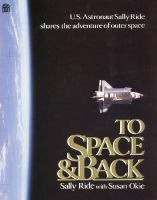
To Space and Back

Living in Space


Friday, November 27, 2009

The Benefits of Music

Have you ever sat in on a storytime or library visit and wondered what was going on? During a storytime, not only is the performer reading stories, but usually music and movement are involved. If you have ever been to one of our summertime 'Wild Times' programs, you will have seen how much music influences the children who attend. Music is helpful for little children especially because it helps teach syllables and aides in speech development.

There is a great article, Tuning Into the Benefits of Music Education, that explains how experiencing music with your children is not only beneficial in their musical aptitude, but also can help get children ready for reading and benefit other areas of their education.

To help with this, the 24-hour TV network, Sprout, has introduced a three-hour morning music fun program that includes the Wiggles. Now, before you roll your eyes and scream "If I have to listen to one more song about hot potatoes or fruit salad....!", think about how much those songs will help your child as they grow and go into school. A little pain on your part, a lot of gain for your children.

Remember to have fun with your kids - dance around the room... enjoy yourself!

Tuesday, October 13, 2009

The Des Plaines Disturbance

Although we are in 'the haunting season', the Des Plaines Disturbance does not refer to a supernatural phenomenon, or your noisy next-door neighbors. The Des Plaines Disturbance is the name for the crater that exists 75 to 200 feet below the surface of our town.

The bedrock underneath Des Plaines was severely fractured by the impact of a meteor or other large projectile and it created the crater that exists beneath most of the town, spanning 5 miles. It was eventually filled by glacial activity, which is why the town looks the way it does today.

As a child, I remember heading out to Yellowstone National Park just after their big fire in 1988. I remember listening to the ranger talk about how fire actually helps the forest grow, and that the trees use the heat of a fire to spread their seeds. Then, all throughout middle school, high school, and even college, I was able to recall those facts for various environmental science classes. My experiences in the National Parks helped me to develop my life-long affinity for the sciences and nature.

You can instill that kind of love in your children, a love of learning - no matter what the subject, but a great way to start is by tying the knowledge into an experience. Here is an easy example: take a walk along the Des Plaines river, and talk with your kids about the crater, glacial movements, and how the river swells every year and how it changes the soil around the it.

If you were not the best science student and you need some help, stop in the library to pick up a children's book or two about glaciers, meteors, or different types of rock. I always find that when I don't know anything about a subject, the best place to start is a children's book; they explain everything, and you don't have to look up the words they use to explain it in the dictionary.

If you think you can handle it, or your children are a bit older, the University of Illinois at Urbana Champaign has a geological society that studies the Des Plaines Disturbance, and their findings can be found here.

Friday, May 15, 2009

New Research on Baby Einstein DVDs

New studies have been done on the effectiveness of Baby Einstein DVDs and the effect of watching TV on babies' brains. The CNN article in the link below provides some information on the outcomes of these studies and how parents and researchers are reacting. When so much of a child's development is happening before they turn two, how is the TV affecting their brains? Understanding TV's effects on the developing brain, explains that while a child's brain is developing so rapidly during the time before they turn two, critical time is being wasted watching TV when it should be used reading with a parent and playing to develop cognitive skills.

Read the articles below, and please let me know what you think!

Study: Want a smart baby? TV's not going to help
Understanding TV's effects on the developing brain